Spraying Makes Mosquitoes Worse
Our Etsy Shop:
Help spread the message!
I couldn’t find the yard signs I was looking for, so I started making them myself.
Yard Signs
Stop Spraying. Start Solving.
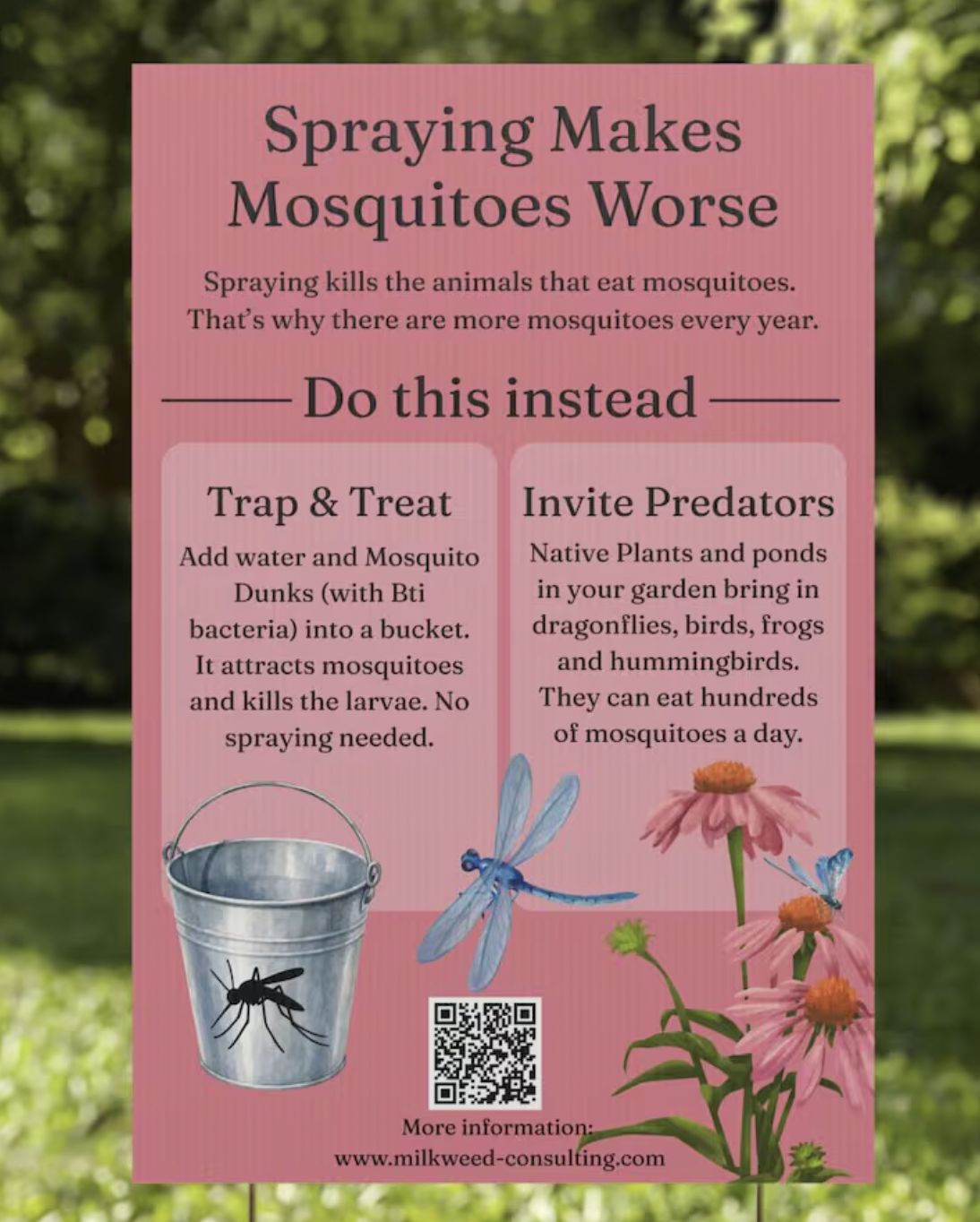
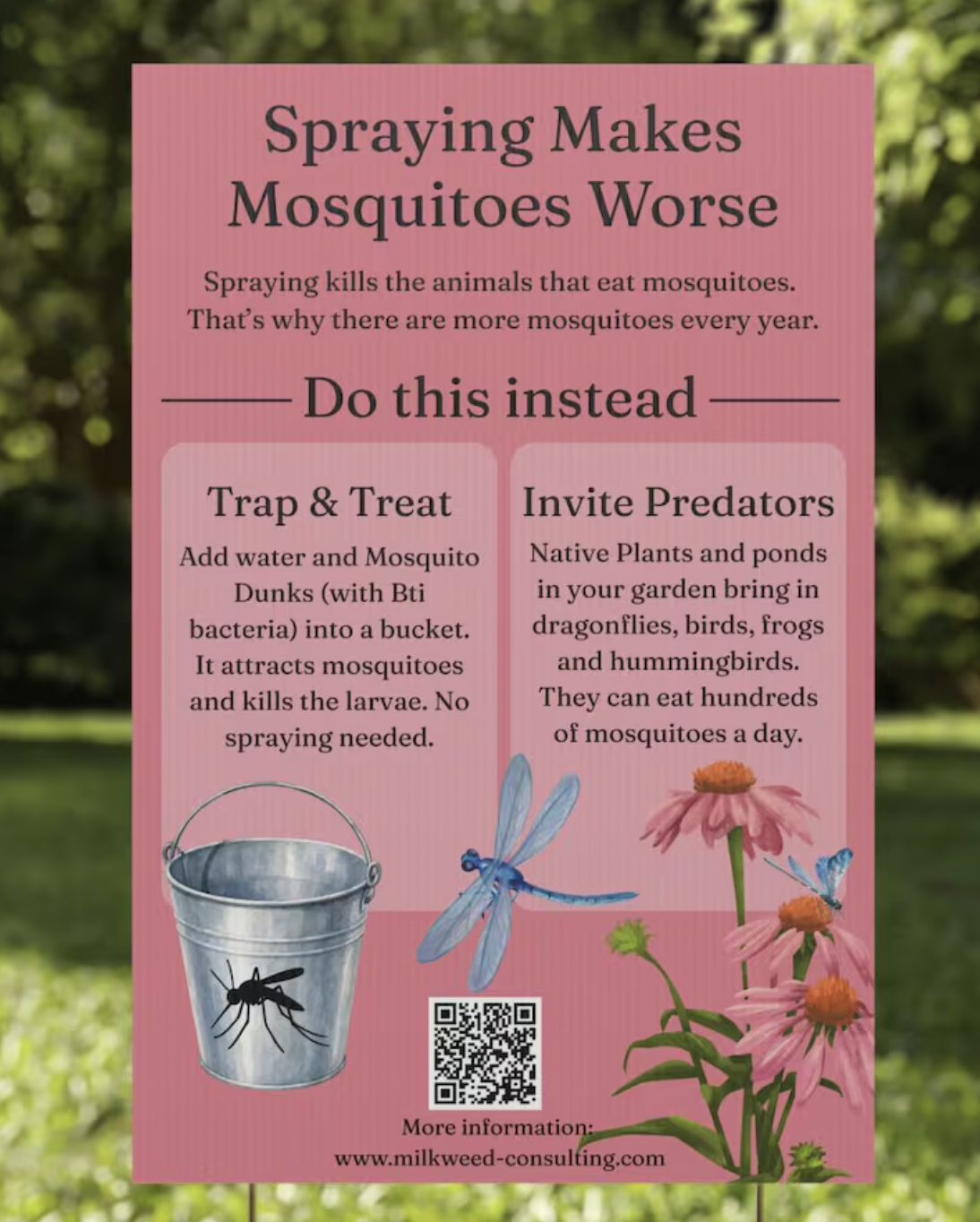
Spraying may seem like the quickest way to get rid of mosquitoes, but many broad-spectrum mosquito sprays contain insecticides, including pyrethroids such as permethrin and bifenthrin, that kill other animals that play an important role in a healthy yard. This includes animals that eat mosquitoes.
A healthier approach is to work with nature by reducing mosquito breeding areas and creating habitat for the animals that help keep mosquito populations in check. Small changes can make your yard more resilient, support more wildlife, and reduce the need for chemical treatments.
Instead of spraying, try these two natural, effective alternatives.
Build a Mosquito Dunk Bucket
Plant native plants and add a pond to your garden
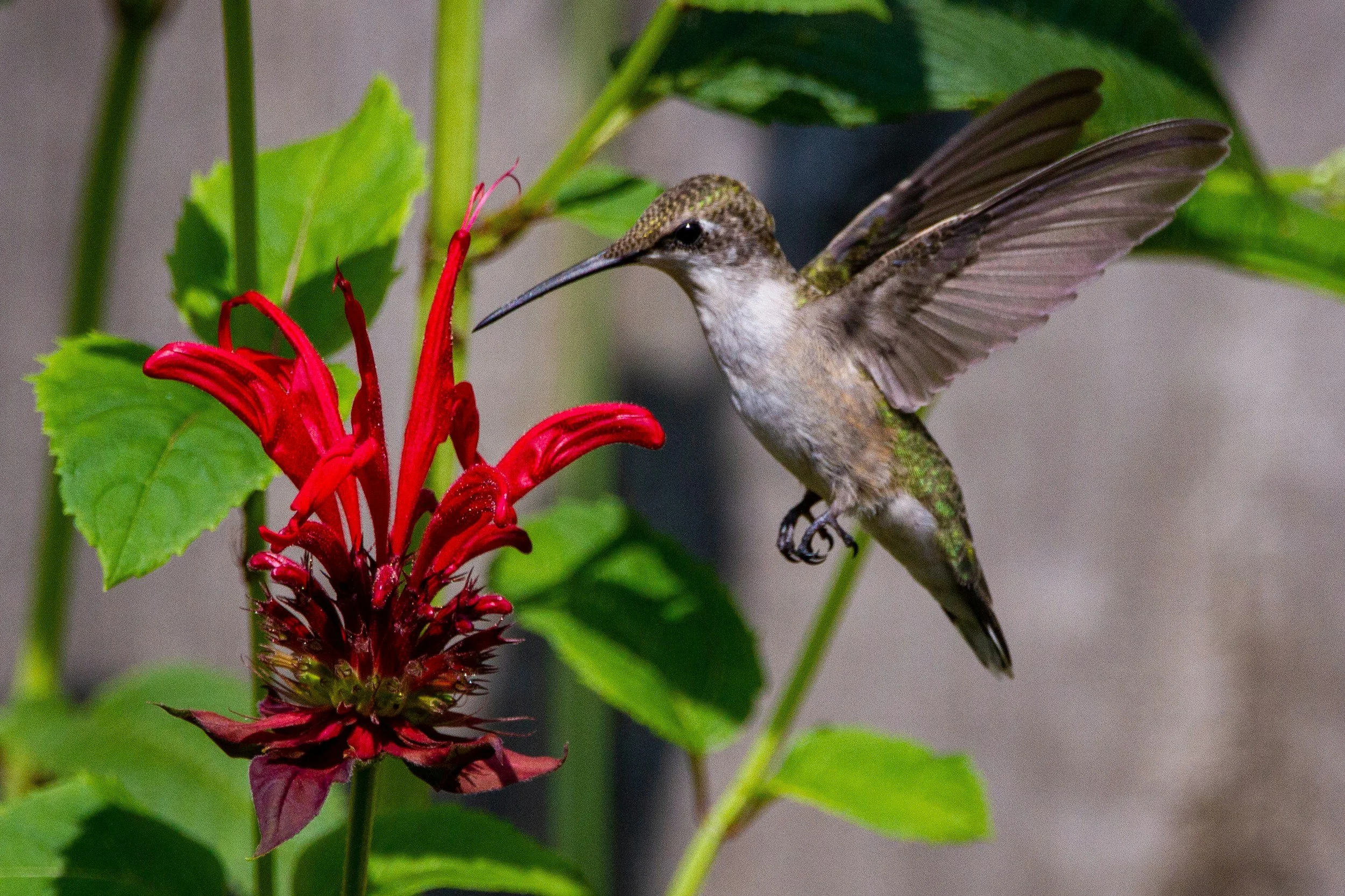
Birds and dragonflies can eat hundreds of mosquitoes a day
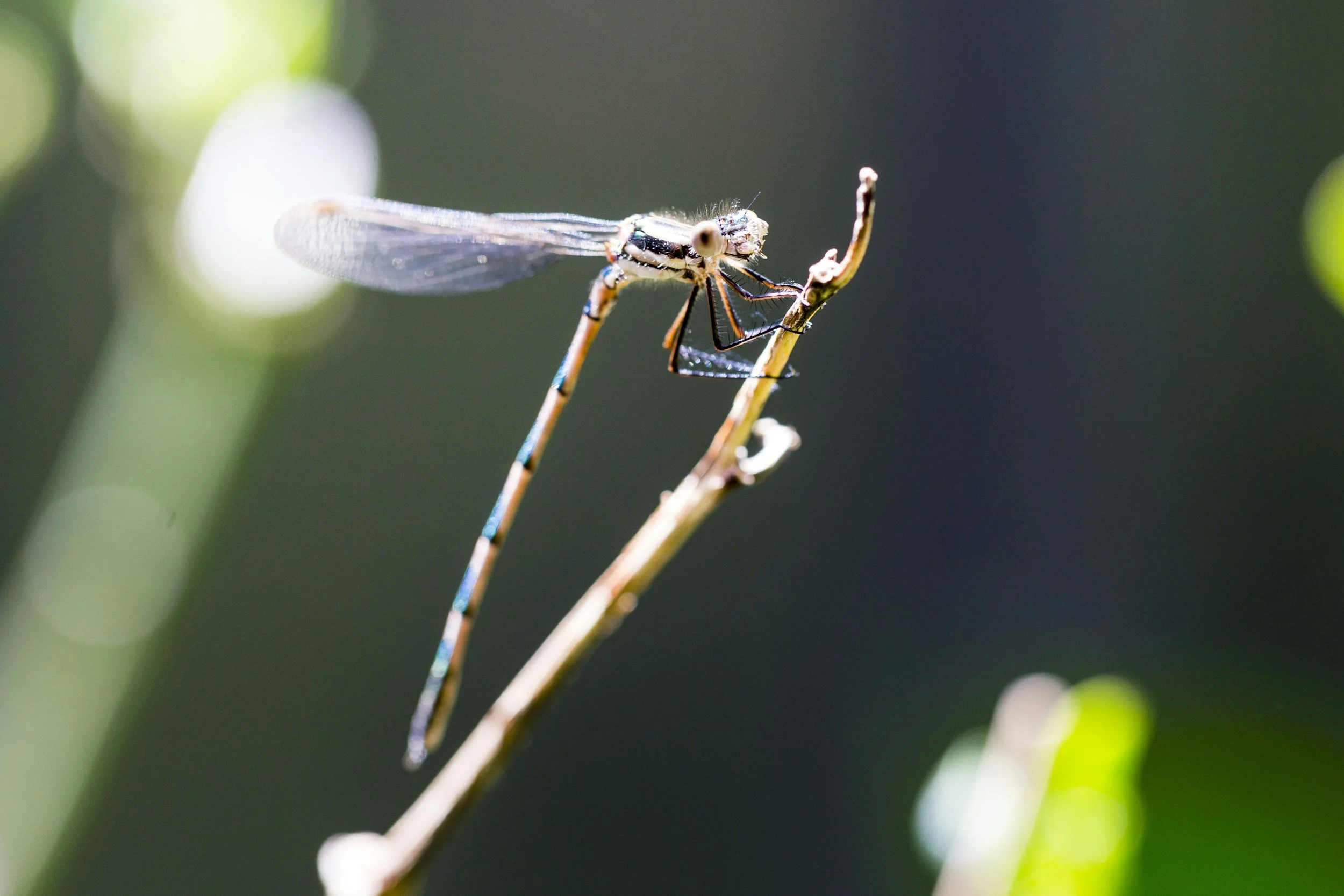
The best long term solution:
One of the most effective long-term ways to support mosquito control is to create a yard where natural predators can thrive.
Dragonflies are some of nature’s best mosquito hunters. They eat mosquitoes as adults, and their young (called nymphs) develop in water, where they feed on mosquito larvae and other small aquatic creatures. Adding a small pond, water feature, or container garden with native aquatic plants can provide habitat for dragonflies and other helpful wildlife.
Birds, frogs, and other backyard visitors also play a role in keeping insect populations balanced. Native flowers, shrubs, and grasses provide the food, shelter, and nesting spaces these animals need to make your garden their home.
By creating a more diverse, wildlife-friendly garden, you’re not just attracting beautiful creatures, you’re building a healthier ecosystem that can help keep nature’s systems working the way they’re meant to.
Great Native Options for the DMV
Native pond plants such as pickerelweed, arrow arum, and blue flag iris provide habitat for dragonfly nymphs.
Native perennials like coneflower, mountain mint, cardinal flower, bee balm, and joe pye weed support the broader insect community that birds and frogs rely on.
Even a small container water garden can provide meaningful habitat if a full pond isn't practical.
Do not add fish into the pond, or they will eat the wildlife you are trying to attract.
The best short-term solution:
Mosquito buckets attract mosquitoes looking for a place to lay their eggs, then prevents those eggs from developing into biting adults.
What You'll Need
A bucket (a 5 gallon bucket works well)
Water
Bacillus thuringiensis mosquito dunks (available at most hardware and garden stores)
How to Make It
Fill the bucket about three quarters full with water.
Add one mosquito dunk. Mosquito dunks contain Bacillus thuringiensis israelensis (Bti), a naturally occurring bacterium that is harmless to people, pets, birds, fish, and other wildlife but lethal to mosquito larvae.
Place the bucket in a shaded area of your yard, away from places where people gather.
Add a partial lid or ladder for animals to climb out if they fall in.
Leave it alone. Female mosquitoes are drawn to the standing water to lay their eggs, and any larvae that hatch are eliminated before they become adults.
Replace the dunk about every 30 days, or according to the package directions, and refill the water as needed
That's it. No spraying, no chemical drift, and no harm to pollinators or the animals that naturally help control mosquitoes.